Round balls on oak leaves or hard, knobby swellings on branches can leave you wondering whether your tree has a serious problem. These unusual growths may be oak galls, and their location matters when deciding what to do next.
Most leaf galls cause little lasting harm. Woody branch galls, including horned and gouty oak galls, deserve closer attention because heavy infestations can damage branches. Understanding the difference can help you avoid unnecessary treatments while recognizing concerns that need a professional evaluation.
Are Oak Galls Harmful to Trees?
Oak galls on trees are abnormal plant growths often triggered by tiny wasps. Most leaf galls cause little lasting harm, while woody horned and gouty oak galls can damage twigs and branches. Their location, extent, and the tree’s overall condition help determine whether monitoring or professional evaluation makes sense.
What Causes Oak Galls?
A gall is an unusual growth made from the tree’s own tissue. Many oak galls develop when tiny gall wasps lay eggs in growing plant tissue. The tree responds by forming a structure that provides food and shelter for the developing larvae, or immature insects.
Different gall-making species produce different shapes. Some create small bumps on leaves, while others cause rounded growths or woody swellings on twigs. An oak can host more than one type of gall, so growths on the same tree may look quite different.
These growths are not all evidence of the same problem. Identifying the affected plant part and the type of gall gives you a better starting point than judging the tree by how unusual the growth looks.
Common Types of Oak Galls
Oak Leaf Galls
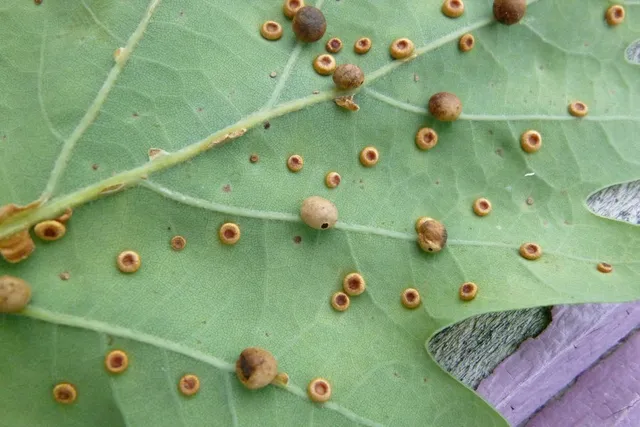
Leaf galls may look like small blisters, bumps, fuzzy patches, or rounded structures attached to foliage. Their appearance varies with the organism that causes them.
Most leaf galls do not seriously affect an established oak’s health. Some can distort leaves or contribute to early leaf drop, but their presence alone usually does not justify chemical treatment.
Oak Apple Galls
Oak apple galls are rounded growths that can resemble small green apples when developing. They later turn brown and may have a thin outer shell with a spongy interior.
Despite their size and noticeable appearance, oak apple galls develop on leaves and generally cause little harm. Finding one does not carry the same concern as finding a woody swelling that surrounds a branch.
Horned Oak Galls
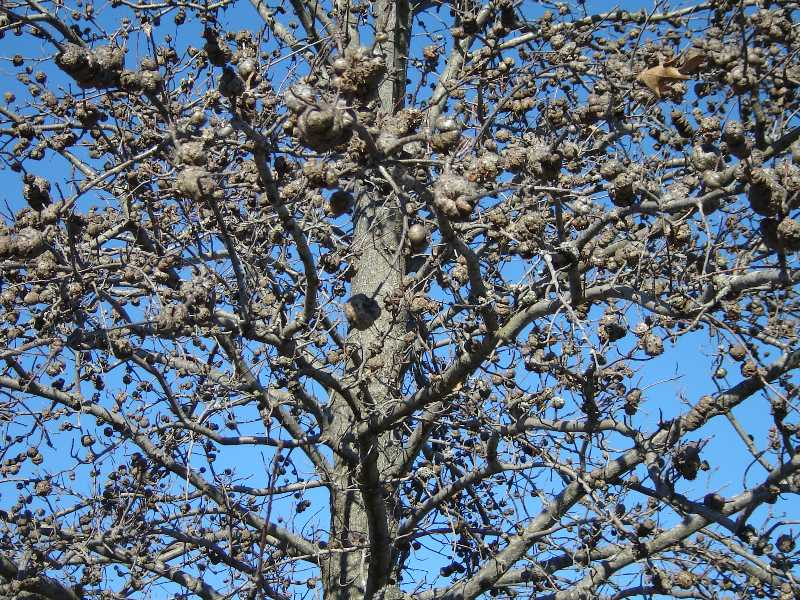
Horned oak galls form hard, woody swellings on twigs and branches. Mature galls develop small, hornlike projections on their surface.
They occur on several oak species, including pin oaks. Heavy infestations can damage affected branches, making the number and distribution of galls important parts of an evaluation.
Gouty Oak Galls
Gouty oak galls also form woody branch swellings, but they lack the distinctive horns. These galls occur on several oaks, including pin, scarlet, and black oaks.
As infestations become extensive, affected twigs and branches may die. Severe cases can contribute to major tree decline, although a few galls do not mean that outcome is inevitable.
How Can You Tell Whether Your Oak Needs Attention?
Start by looking at where the growths occur. Galls limited to leaves generally raise different concerns than woody growths surrounding twigs or branches.
Next, look at the tree as a whole. Useful observations to share during an evaluation include:
- Whether the growths appear in one area or throughout the canopy.
- Whether branch tips beyond the swellings have died.
- Whether the canopy looks thinner than in previous growing seasons.
- Whether the tree has dropped dead twigs or larger limbs.
- Whether leaves show other changes, such as yellowing or unusually early drop.
These observations help guide an assessment, but they do not establish the cause. An oak with galls may also face unrelated soil, root, insect, or disease problems. Avoid assuming that every symptom comes from the visible growths.
For property owners in St. Louis County, clear photos of both the growths and the entire tree can help explain the concern when requesting an evaluation.
Can Oak Galls Be Treated?
There is no single oak gall treatment that works for every type. Many leaf galls need no treatment, while horned and gouty oak galls present a more difficult management problem.
Gall-making insects spend much of their development protected inside plant tissue. That protection, along with complicated life cycles and application timing, makes control difficult. Spraying visible galls should not be expected to reverse the growths or reliably eliminate the insects inside.
Missouri Botanical Garden notes that chemical treatments are unlikely to control horned or gouty oak gall effectively. Management may instead involve monitoring, supporting tree health, and selectively pruning affected growth where practical. None of these steps guarantees that new galls will stop forming.
How to Support an Oak With Galls
A tree with a minor infestation may continue to thrive. Proper watering during dry periods and care suited to the site can support its overall health, even though these steps do not cure an infestation. Natural predators and parasites also help limit gall-wasp populations.
Keep a simple record of changes. Photos taken from the same location can help you compare canopy fullness and identify areas of new dieback. Note when symptoms appear and whether they affect the whole tree or individual branches.
Avoid purchasing a spray or requesting fertilizer solely because you see galls. First determine what type of growth is present and whether the tree has a separate care need.
When to Call a Professional
Schedule an evaluation if woody galls affect many branches or appear alongside canopy thinning, branch dieback, or limb drop. These symptoms warrant a closer assessment of both tree health and safety. An evaluation also makes sense when you cannot tell whether a growth is a gall. Some insects and other tree conditions can resemble galls, and accurate identification helps prevent unnecessary work.
Concerned about unusual growths on your oak? Ray’s Tree Service offers free evaluations to help property owners understand tree health concerns. Contact our team to schedule an evaluation and discuss the right next step.