6 Warning Signs Your Trees May Have an Insect or Mite Problem
A healthy tree can add beauty, shade, and value to your property but insects and mites can quietly threaten that health long before major damage becomes obvious.
Many tree pests begin with subtle symptoms that are easy to overlook. By learning what to watch for, homeowners can identify problems early, giving trees the best chance for successful treatment while avoiding costly damage or even tree removal.
If you notice something unusual in your landscape, don’t assume it’s simply seasonal stress. Early detection is one of the most important steps in protecting your trees and preventing problems from spreading throughout your property.
Why Early Detection Matters
Insects and mites feed on leaves, bark, stems, and even the internal tissues of trees. While some pests cause only cosmetic damage, others weaken a tree over time, making it more vulnerable to disease, storm damage, and structural failure.
Many infestations begin in one tree before spreading to nearby trees and shrubs. Catching the problem early often means more treatment options, lower costs, and a much greater chance of preserving the tree.
1. Spotted, Discolored, or Damaged Leaves
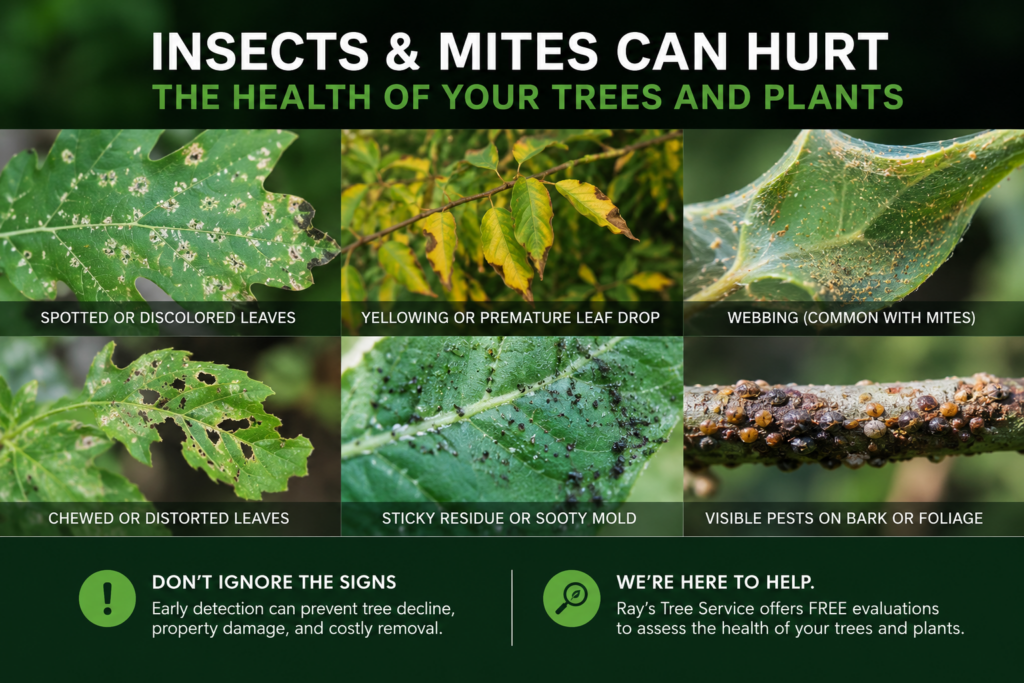
Leaves are often the first place you’ll notice that something isn’t right.
Watch for:
- Brown or black spots
- Yellowing leaves outside of normal seasonal changes
- Pale or bleached-looking foliage
- Premature leaf drop
These symptoms can indicate feeding damage from insects or mites, but they may also signal disease or environmental stress. Because several issues produce similar symptoms, a professional evaluation is often the best way to determine the true cause.
2. Thinning Canopy or Sparse Leaf Growth
A tree should produce a full, healthy canopy during the growing season.
If sections of the tree aren’t leafing out normally or the canopy appears noticeably thinner than previous years, insects feeding on foliage or inside the tree may be limiting its ability to produce healthy growth.
Dead or declining branches mixed throughout the canopy are another sign that the tree may be under stress.
3. Fine Webbing on Leaves or Branches
Tiny webs stretched across leaves or branch tips are commonly associated with spider mites. Unlike spiders, spider mites actually feed on plant tissue. Heavy infestations can cause:
- Speckled or stippled leaves
- Yellowing foliage
- Premature leaf drop
- Overall decline in tree health
Because spider mites are extremely small, homeowners often notice the webbing before they ever see the pests themselves.
4. Chewed or Distorted Leaves
Leaves with holes, ragged edges, or unusual curling often indicate that insects are actively feeding. Common chewing insects include caterpillars, beetles, and various leaf-feeding pests.
While a small amount of leaf damage is usually not cause for concern, widespread defoliation can reduce a tree’s ability to produce energy through photosynthesis, leading to long-term stress if left untreated.
5. Sticky Residue or Black Sooty Mold
Have you noticed a sticky coating on leaves, outdoor furniture, vehicles, or walkways beneath your tree?
This sticky substance, known as honeydew, is produced by insects such as aphids, scale insects, and other sap-feeding pests. Honeydew often leads to the growth of black sooty mold, which can cover leaves and reduce the tree’s ability to photosynthesize efficiently.
Although the mold itself usually isn’t the primary problem, it’s often a strong indicator that insect activity is already well underway.
6. Visible Insects on Bark or Foliage
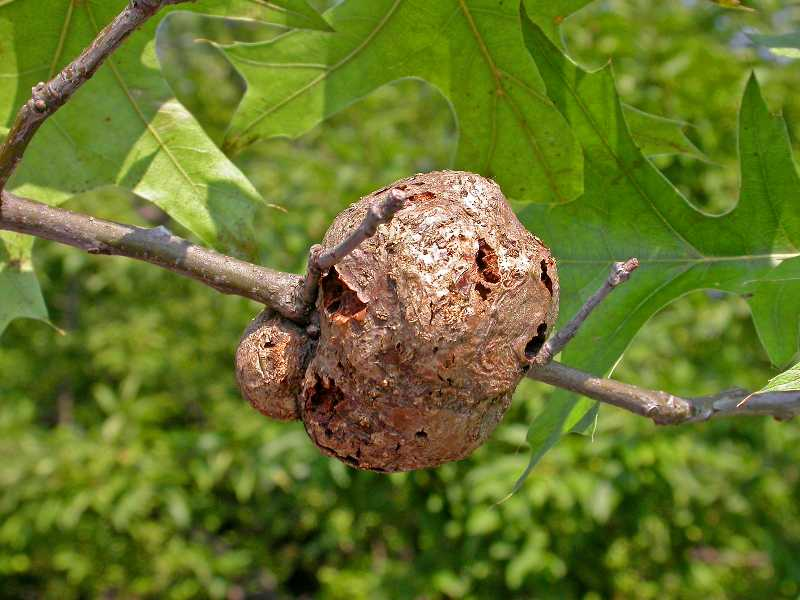
If you notice clusters of insects, scale insects attached to bark, or unusual activity on branches or leaves, it’s worth having the tree inspected.
Some pests spend much of their life cycle hidden beneath bark or inside tree tissue, so visible insects may only represent part of a larger infestation.
Common Misconceptions About Tree Pests
“The tree still has leaves, so it’s healthy.”
Not necessarily. Many trees continue producing leaves even while insects are causing significant internal damage. Visible decline often appears only after the infestation has become well established.
“The insects will go away on their own.”
Some pest populations naturally decline over time, but many continue reproducing until significant damage has occurred. Waiting too long can limit treatment options and increase costs.
“It’s just drought stress.”
Heat and drought can certainly stress trees, but insect damage often mimics these symptoms. A professional inspection can determine whether pests, environmental conditions, or a combination of both are responsible.
Request a Free Tree Evaluation
If you’ve noticed spotted leaves, thinning canopies, webbing, sticky residue, or other signs of insect activity, Ray’s Tree Service is here to help.
We provide free tree evaluations for homeowners and property managers throughout Greater St. Louis area. Our experienced team can assess your trees, identify pest activity, and recommend the right course of action to protect your property safely and effectively.
Request a free tree evaluation today!