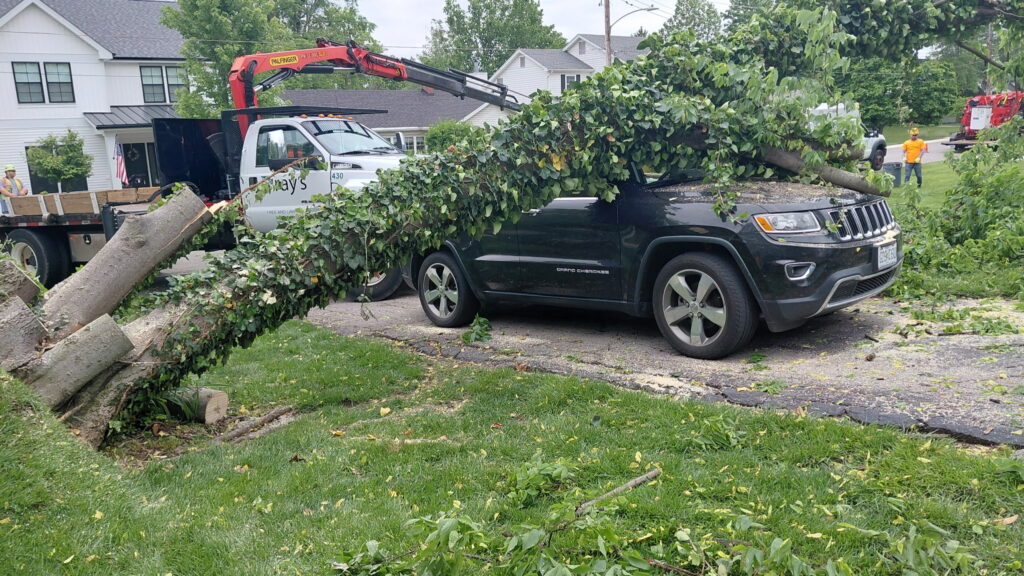
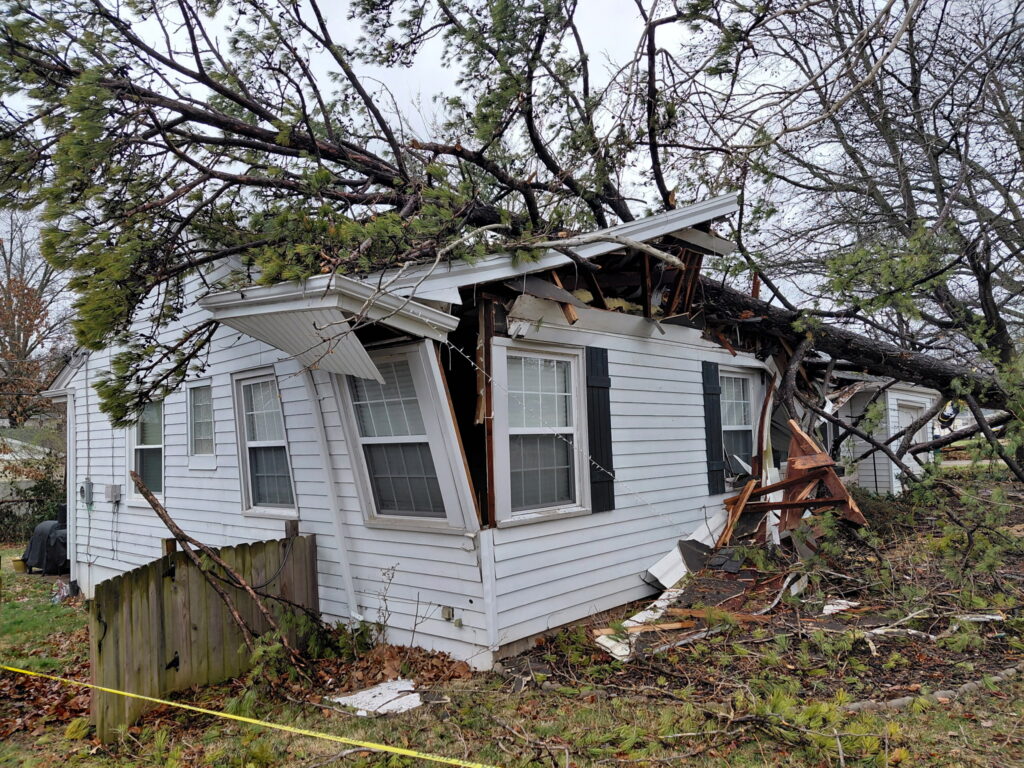
Storms don’t have to knock a tree to the ground to make it dangerous. Strong winds, heavy rain, lightning, and ice can weaken a tree’s structure in ways that are not always obvious. A tree may still be standing after the storm has passed, but hidden damage could make it more likely to lose large limbs or fail entirely later.
Knowing what to look for after severe weather can help you protect your home, vehicles, and the people on your property. Here’s how to recognize the warning signs of a storm-damaged tree and when it’s time to call a professional.
Why Storms Can Cause Hidden Tree Damage
Trees are built to withstand normal weather, but severe storms place tremendous stress on trunks, branches, and root systems.
High winds can twist large limbs, saturated soil can weaken root support, lightning can damage internal wood, and ice accumulation can overload branches with excessive weight. Some damage is easy to spot. Other problems develop internally and may not become obvious until weeks or even months later.
Common Signs a Tree May Be Dangerous After a Storm
Hanging or Broken Branches
Broken limbs that remain suspended in the canopy are among the most immediate hazards after a storm. These branches can fall without warning, even days later, creating a serious risk to people, vehicles, roofs, fences, and walkways. Even smaller hanging limbs should be treated with caution because they can become unstable as the tree dries or additional wind occurs.
A Tree That Has Started Leaning
Not every leaning tree is dangerous. Some naturally grow at an angle. However, if a tree suddenly begins leaning after a storm, especially one that was previously upright, it may indicate root failure or structural instability. A newly leaning tree should be evaluated as soon as possible, particularly if it is close to a house, driveway, sidewalk, or power lines.
Cracks in the Trunk
Fresh vertical cracks or deep splits in the trunk often indicate that the tree has experienced significant stress. These cracks may weaken the tree’s ability to support its canopy and can increase the likelihood of future failure. Large trunk cracks should never be ignored, even if the tree still has healthy leaves.
Lifted Soil or Exposed Roots
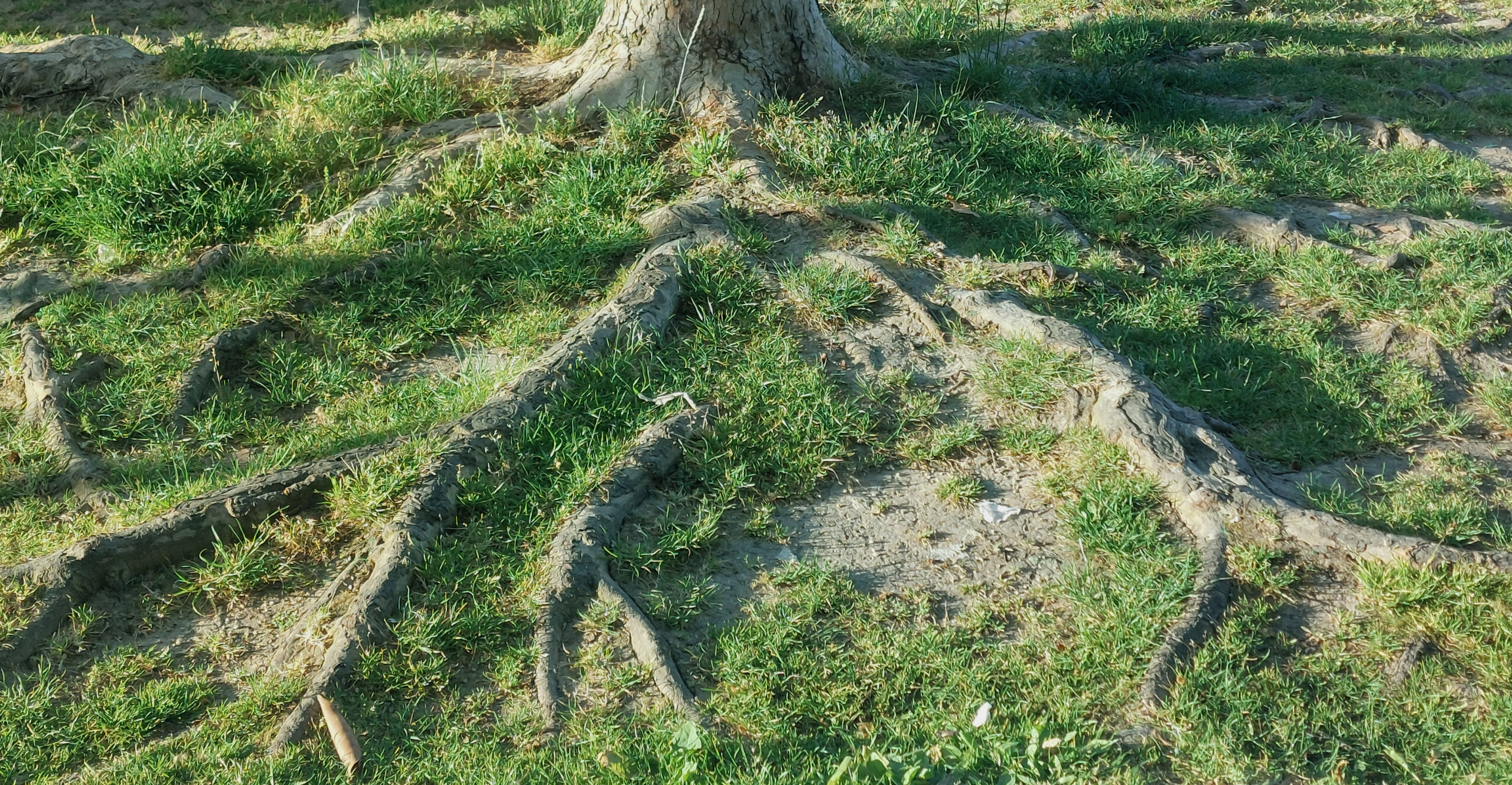
Take a close look at the ground around the base of the tree. If the soil appears raised on one side, cracked, or if roots have become exposed after heavy rain, the tree’s root system may have shifted. Root damage is especially concerning because healthy roots provide the stability that keeps a tree standing.
Split or Cracked Major Limbs
Large scaffold branches that split during a storm may not fail immediately. Some remain attached for weeks before eventually breaking under their own weight. These damaged limbs can sometimes be reduced or removed through proper pruning, while others may indicate the entire tree has become structurally compromised.
Missing Bark or Lightning Damage
Lightning doesn’t always split a tree completely in half. It may leave long strips of missing bark, vertical scars, or internal damage that weakens the tree over time. Trees struck by lightning should be inspected even if they continue to produce leaves, as internal injuries aren’t always visible from the outside.
Canopy Changes After the Storm
If sections of the canopy fail to leaf out, leaves suddenly wilt, or branches begin dying back after a storm, the tree may have sustained damage to its vascular system or roots. These symptoms often appear days or weeks after the storm, making follow-up inspections just as important as the initial assessment.
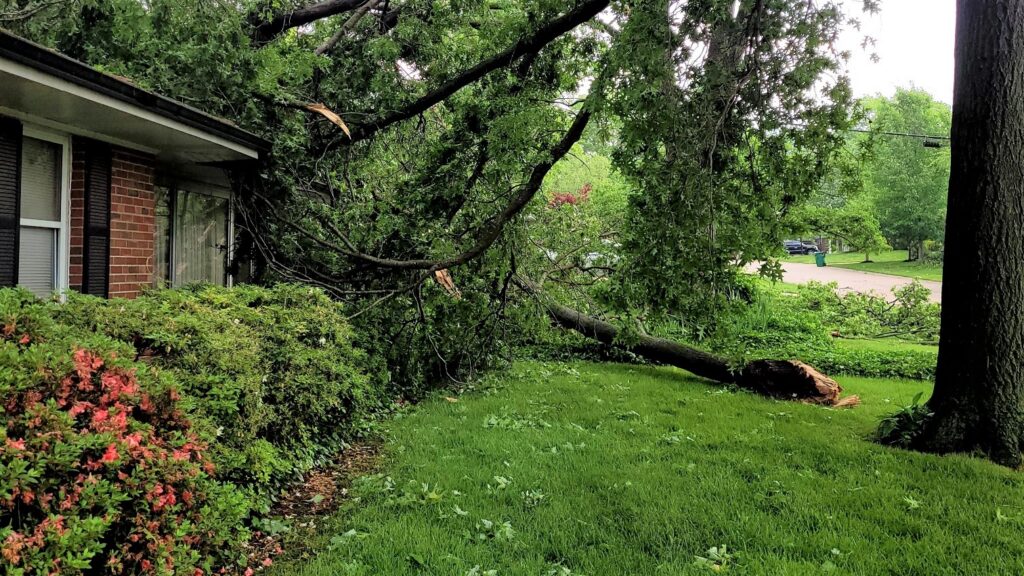
Storms can leave behind damage that isn’t always easy to recognize.
Even trees that appear healthy may have hidden structural problems that increase the risk of future failure. Inspecting your trees after severe weather and addressing concerns early can help protect your property and improve safety. If you notice signs a tree may be dangerous after a storm, the team at Ray’s Tree Service can evaluate the damage and recommend the most appropriate course of action.
Whether you need emergency tree service, storm cleanup, or a professional tree risk assessment, we’re here to help homeowners, businesses, and property managers throughout St. Louis County.
Contact Ray’s Tree Service today to schedule an evaluation or request emergency storm assistance.