What Property Owners Need to Know
Emerald Ash Borer can turn a healthy-looking ash tree into a serious concern if an infestation goes unnoticed. This invasive insect attacks ash trees by disrupting the movement of water and nutrients beneath the bark. As damage increases, the tree may develop dead branches, a thinning canopy, and structural problems.
Property owners in St. Louis County who have ash trees should know how to recognize possible Emerald Ash Borer damage and when to seek professional help. Early evaluation matters because some trees may respond well to treatment, while trees with advanced decline may become too damaged to save safely.
What Is the Emerald Ash Borer?
The Emerald Ash Borer, often shortened to EAB, is a small metallic green beetle that attacks ash trees. The adult beetles feed on leaves, but the larvae cause the most serious damage. After eggs hatch, the larvae feed beneath the bark. Their feeding damages the vascular tissue that carries water and nutrients between the roots and canopy. As more of this tissue becomes damaged, the tree struggles to support normal growth.
An infested tree may initially show few obvious symptoms. As the infestation progresses, branches can die, the canopy can thin, and the tree can eventually die.
Because EAB specifically targets ash trees, confirming the tree species is an important first step. Symptoms such as canopy decline and dead branches can also result from other tree health problems, so visible damage alone does not always confirm an Emerald Ash Borer infestation.
Signs of Emerald Ash Borer in Ash Trees
EAB damage often becomes easier to recognize as an infestation progresses. Property owners should watch for several changes rather than relying on one symptom alone.
Thinning at the Top of the Tree
Canopy thinning or dieback often begins in the upper portions of an infested ash tree. You may notice fewer leaves, bare branches, or sections of the crown that do not fill out normally. Canopy decline can have several causes, so thinning leaves should prompt a closer evaluation rather than an automatic assumption that EAB is responsible.
Dead or Dying Branches
As the tree loses its ability to transport water and nutrients, branches may begin to die. Increasing amounts of dead wood can also create a safety concern, particularly when large limbs extend over buildings, parking areas, sidewalks, or other frequently used spaces.
D-Shaped Exit Holes
Adult Emerald Ash Borers leave distinctive D-shaped holes when they emerge through the bark. These holes can be small and difficult to spot, especially from the ground.
Bark Splitting
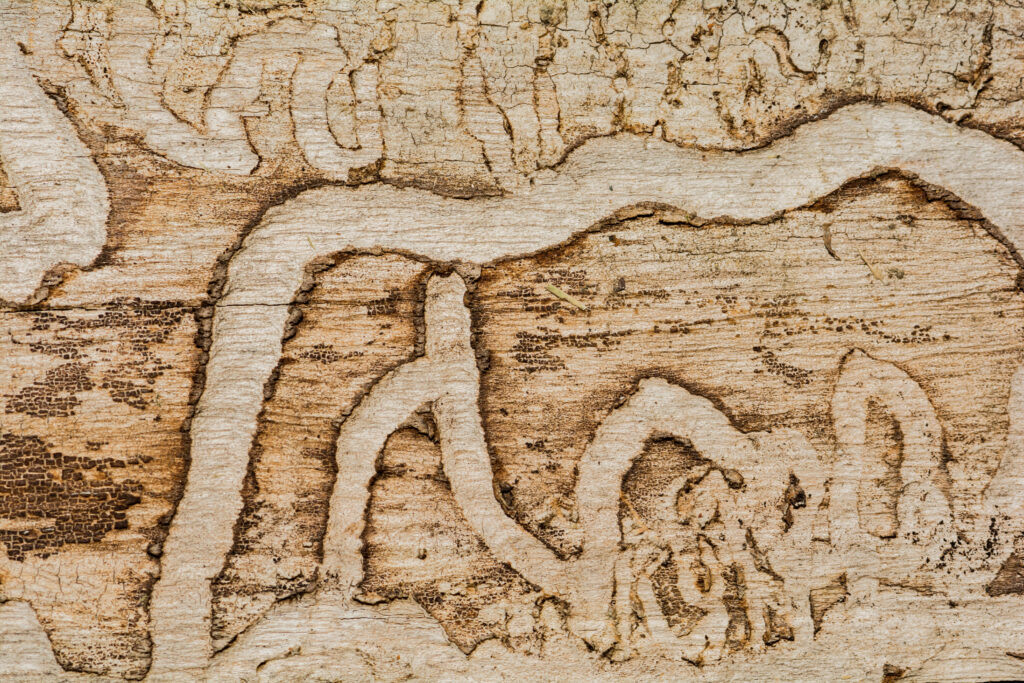
Vertical cracks or splits may develop in the bark of an infested tree. In some cases, removing loose bark may reveal winding larval galleries underneath. Property owners should avoid unnecessarily peeling healthy bark from a tree while searching for signs of infestation. A professional can inspect suspicious areas without causing additional damage.
Increased Woodpecker Activity
Woodpeckers feed on insects beneath tree bark. Increased activity on an ash tree, particularly when sections of bark appear lighter or have been removed by birds, can indicate insects beneath the surface.
New Shoots Along the Trunk or Base
A stressed ash tree may produce clusters of new shoots from the trunk or near its base. This type of growth, sometimes called epicormic growth, can occur when a tree experiences significant stress.
Can Emerald Ash Borer Be Treated?
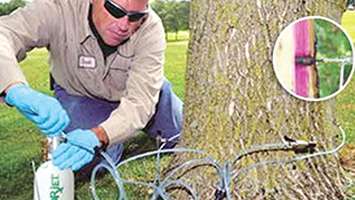
Emerald Ash Borer treatment can help protect healthy ash trees and may save some trees in the early stages of infestation. Professional insecticide treatments target the pest before damage becomes too extensive. Once an ash tree has suffered significant canopy loss or structural decline, removal may be the safer option. An on-site evaluation can help determine the appropriate approach.
When Does an Ash Tree Need to Be Removed?
Treatment does not make sense for every infested ash tree. If Emerald Ash Borer has caused extensive decline, the tree may no longer have enough healthy tissue or structural strength to justify preservation. Removal may become appropriate when a tree has substantial canopy loss, widespread dead branches, significant structural deterioration, or other conditions that create an unacceptable risk.
Location also matters. A declining ash tree next to a house, roadway, sidewalk, parking area, or other frequently occupied space can present a different level of concern than a tree in an isolated part of a property.
A professional inspection can help property owners compare the condition of the tree with the risks and benefits of continued treatment.
Talk With Ray’s Tree Service About Your Ash Trees
If you are concerned about an ash tree on your property, contact Ray’s Tree Service to schedule a free evaluation. Our team can assess the tree’s condition and discuss whether Emerald Ash Borer treatment, continued monitoring, or tree removal is the appropriate next step for your property.